The UK's Specialist Office Furniture Recycling Facility
Coggin SOS recycles end-of-life office furniture UK-wide at its Lancashire facility: reuse first, zero to landfill, and a waste transfer note and recycling certificate on every load. Recycling is paid work, never an unpaid collection. It is the documented route for office furniture disposal.
Zero
documented on every load
Every load
waste transfer note and recycling certificate
UK-wide
delivery into Lancashire from anywhere in the UK, London included
1 working day
typically, once we have your details
Trade and partner enquiries. Tell us what you are sending and we come back with trade terms, typically within one working day.
Prefer to talk it through? Call 01995 606414
What We Have Recycled
1,900+
tonnes of office furniture recycled
74,000+
items processed at our Lancashire facility
600+
certificates issued with waste transfer notes
200+
trade partners send office furniture to us
A Downstream Partner Your Business Can Rely On
Scheduled or ad hoc loads
Regular inbound loads or one-off projects, nationwide into our Lancashire facility
Documentation for your client
Waste transfer notes, recycling certificates and estimated carbon figures with every load
One account, every project
A single point of contact, consistent trade terms and paperwork per project
Overflow capacity
When your own routes are full or a project lands composite furniture you cannot process, we take it
Fit-out contractors, removal firms, FM providers and waste operators use us as their specialist route for office furniture. You keep your client relationship. We handle the material. Veolia, Overbury, Harrow Green, Morgan Lovell and Kenny Waste Management are among the 200+ trade partners who send to us.
What Happens After Your Load Arrives
Send details and photos
Item types, quantities and rough phone photos. Trade terms come back typically within one working day.
Transport agreed
You deliver, or we arrange the vehicle while your team loads. If our team also loads, that is quoted as an office clearance.
Booked in and assessed for reuse
Logged against your project so the paperwork matches the load. Anything with life left is worth more in use than in pieces.
Stripped and separated
Into steel, plastics, timber and foam. Chairs are the hardest item in a fit-out to deal with and we take them by the lorryload.
Reprocessed and reported
Through certified partners and back into manufacturing supply chains. Waste transfer note, recycling certificate and weights per load.

Anyone can issue a certificate. This is the part most suppliers never show you: chairs coming off the vehicle and plastic actually being shredded for reprocessing. Furniture recycling is often combined with office clearance, refurbishment and asset disposal programmes, so nothing usable is wasted and nothing recyclable goes to landfill.
Materials We Recycle
Steel and aluminium
From desk frames, chair bases and storage units
Wood and MDF
From desktop surfaces and panel systems
Plastics
From chair components and fittings
Foam and fabric
From seating, where recycling routes exist
When recycling is the right option
- Damaged beyond economical repair
- At the end of its usable life
- Below current standards or regulations
- Cannot be refurbished or resold
- Reuse is assessed first. Recycling is our second choice and landfill is never an option
What specialist processing adds
- Separation: composite items broken down by material before anything is reprocessed
- Recovery: materials returned to the circular economy through certified partners
- Documentation: waste transfer notes, recycling certificates and estimated carbon figures for your client's ESG team
- Honesty: some fabrics and composite panels have limited routes, and we confirm what can and cannot be processed
Office furniture is metal, plastic, fabric, timber and foam bonded into one unit. General waste streams cannot separate it economically, which is why most of it otherwise ends up in landfill.
From the Recycling Yard
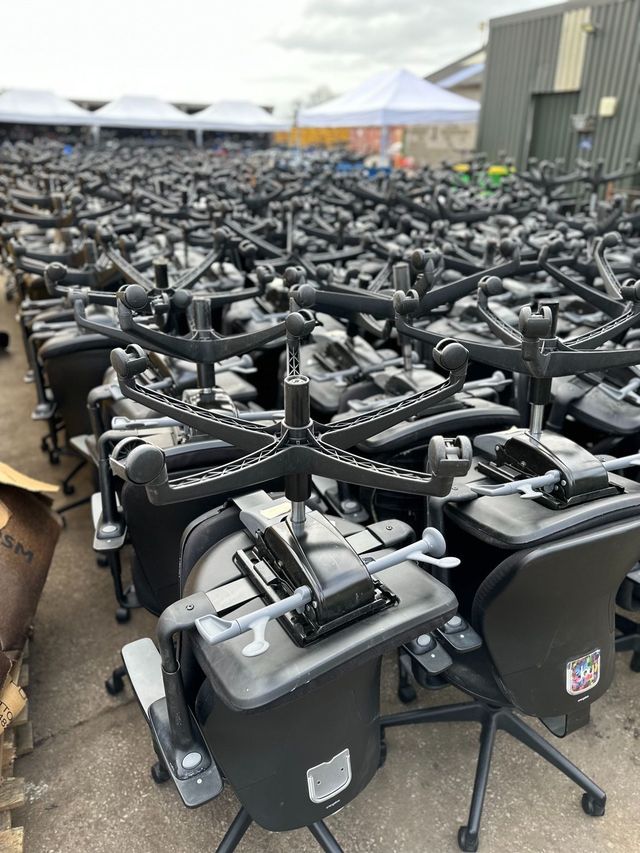
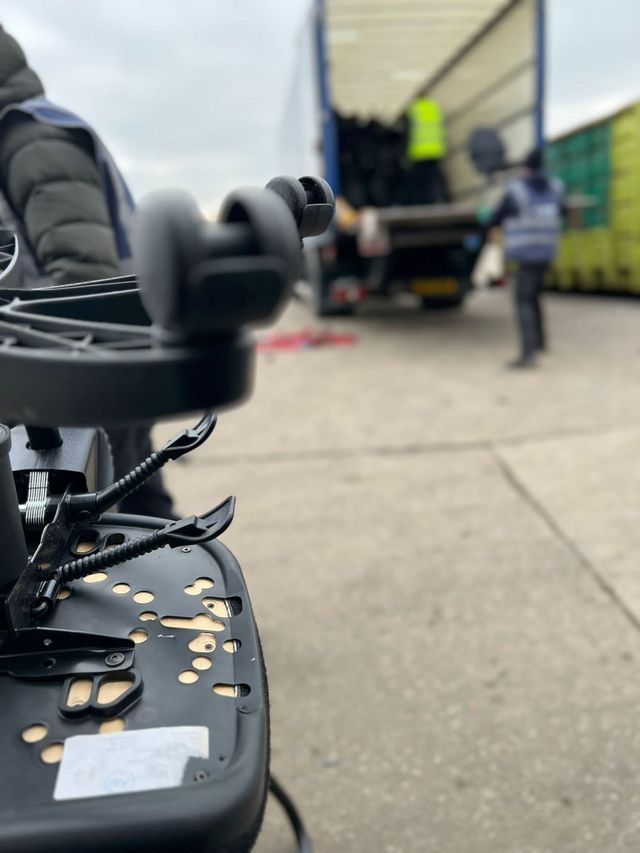
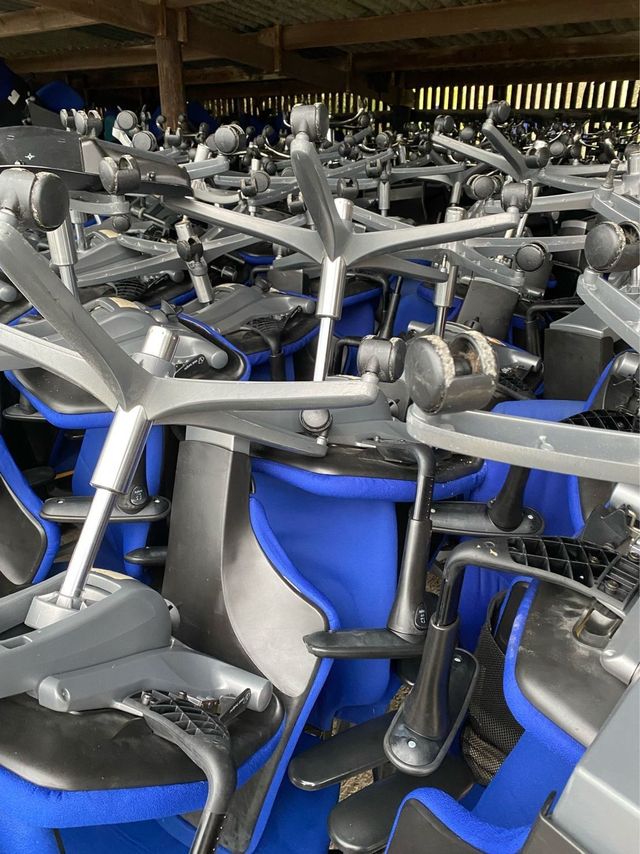
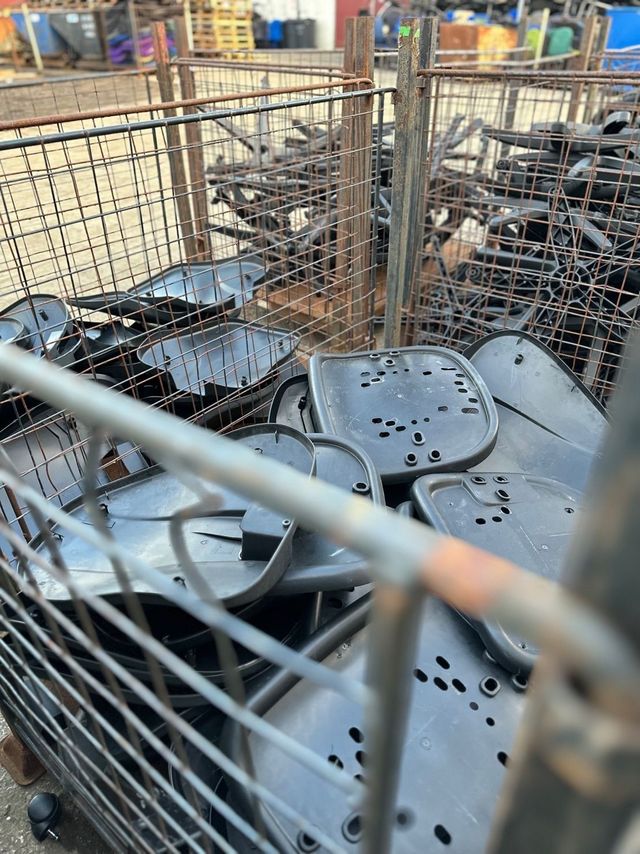
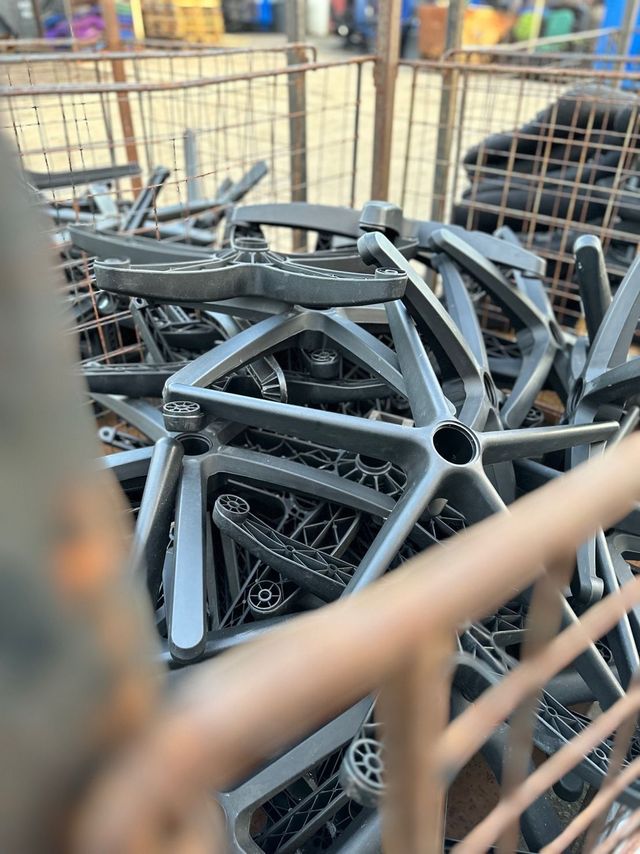


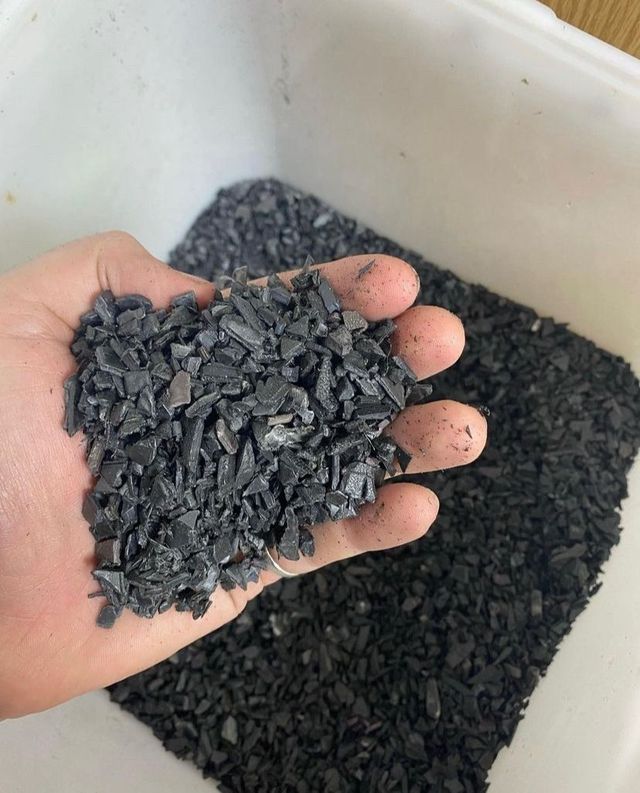

Photographed at our Lancashire facility. Chairs are stripped to steel, plastic and foam, desk tops go to the wood stream and the plastic is shredded into regrind for reprocessing.
What Recycling Costs and What You Get Back
What it costs
- Mixed load: from £690 per load ex VAT on a rigid wagon
- Chairs: from £20 each ex VAT, falling to £7.50 at 101 or more
- Desks and meeting tables: from £15 each ex VAT, falling to £10 at volume
- Metal pedestals, cabinets, cupboards and lockers: no charge, because scrap recovery underwrites them
- Loose waste: from £0.35 a kilo ex VAT, priced by stream
Rates are for material delivered to our Lancashire facility. Collection is quoted separately and the final price is confirmed on survey.
What every load leaves with
- A waste transfer note for every load
- A recycling certificate confirming material processing
- Materials recovered by type and weight
- Recycling routes used and partner certifications
- Item diversion data and estimated carbon figures for sustainability teams
Is the recycling compliant?
Yes. All recycling is carried out in line with waste regulations and environmental standards, and the paperwork above is what an auditor asks for. Read more about our sustainability commitments and reporting.
Recycling is charged on published trade rates. Unlike a general waste route it recovers value from the materials first, so anything we can resell or donate is offset against your charge.
Furniture Recycling Explained
How do I dispose of office chairs?
Send them to a specialist office furniture recycler, not a skip. Usable chairs are reused or resold and the rest become metal, plastic and foam.
Trade partners deliver in bulk to our Lancashire facility, or we arrange the transport while your team loads. If our team collects and loads, that is quoted as an office clearance with the recycling built in. Either way the paperwork shows where every chair went.
What is the difference between clearance and recycling?
Clearance removes furniture from your site and prioritises reuse. Recycling breaks furniture down into materials. We assess everything for reuse first, only recycling what cannot be reused.
Is this the same as office furniture disposal?
Yes, with one difference: where standard disposal sends furniture to landfill, we send it to reuse or material recycling, and we document where every item went.
Can you recycle all types of office furniture?
Most office furniture can be recycled. Some materials have limited recycling routes, such as certain fabrics and composite panels. We will confirm what can and cannot be processed.
Do we send the furniture to you, or can you collect it?
Either works. Most trade partners deliver material in themselves, and we can arrange the transport while your team loads, which stays a recycling job.
If our team does the collecting and loading, that is quoted as an office clearance with the recycling included. Same outcome and same paperwork either way.
What certifications do your recycling partners hold?
Our partners hold the relevant waste carrier licences and environmental permits. Certifications vary by material stream.
Your report names the recycling routes used and the partner certifications behind them.
How do I know furniture has actually been recycled?
You receive a detailed report showing materials processed by type and weight, the recycling routes used and the partner certifications, plus a recycling certificate for the load.
Is recycling more expensive than sending furniture to landfill?
Recycling can cost more than basic skip hire, but it recovers material value, meets compliance requirements and avoids landfill tax. For most businesses, the difference is marginal.
Cannot see your question? Call 01995 606414 or send us the details and we will come back within one working day.
Rated by the Businesses Who Send Us Furniture
The team at Coggin helped me with an office refurb this summer and the service was 10/10. No pressure was applied and Jess allowed me to plan and take my time. We went ahead with 10 desks and multiple storage units, also replacing my old furniture and recycling it. Install was extremely smooth with minimal disturbance to our sales floor. We will be using Coggin to refurb 2 other offices in 2026 and 2027.
Matthew Welch
Verified review · July 2026
We used Coggin for our recent office refit. They removed for recycling our old office kit and supplied c. 30 refurbished chairs, at a fraction of the cost of buying new. From start to finish, Jess was a delight to work with, being prompt with information, keeping us informed and being flexible when we changed our minds. Would recommend these chaps in a heartbeat.
John Lister
Verified review · July 2026
Really professional service, quick and efficient. The guys who collected were very friendly and got the job done. Will definitely be using them again.
Gareth
Verified review · July 2026
Trusted by UK Businesses Since the 1980s








Ready to Talk Terms?
Tell us what you are sending or call the facility directly.